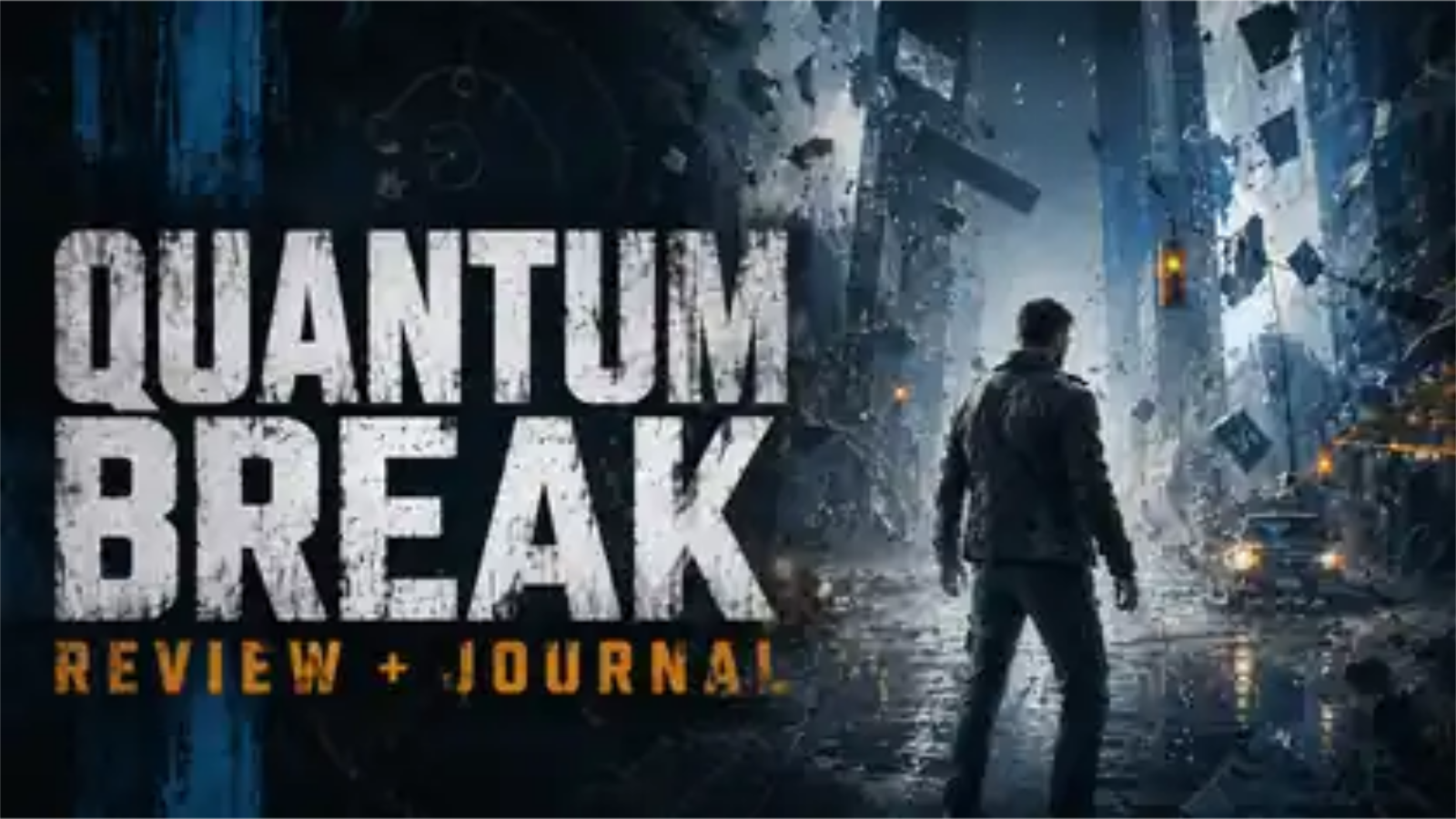
Quantum Break
Replay-ready Remedy sci-fi review scaffold with old-PC readiness checks, adversarial bias tests, and a separate illustrated journey for live narration.
Decision layer / system critique / field artifacts
Knowing the next move is clarity.Understanding the game is control.
A portfolio for testing where objectives meet behavior: game reports, AI motion, code tools, and world systems read as loops, constraints, and evidence.
About / operating mode
OBJECTIVE/ACTUAL is a working portfolio method: compare intent against behavior, read the system state, then route the next move with evidence.
I work best where the shape is not obvious yet: turning rough ideas into usable structures, finding the gap between goal and behavior, and pushing the result until it survives screenshots, links, builds, and edge cases.
Portfolio map
The lanes are different outputs of the same method: read intent, inspect behavior, map friction, and turn the next decision into a public artifact.
Static Pages output, source-of-truth generation, screenshots, fallback paths, and local/live QA loops.
Objective to proof 02 / Review labALERTED score anatomy, taste-fit lanes, trust ledgers, spoiler policy, and replay journals.
Metro + Quantum Break + Prey 03 / Narrative worldsWorld rules, procedures, lore structures, visual maps, and playable constraints for unusual concepts.
Apocalypse Express 04 / Illustrated journalsSession notes become fullscreen dossier scrapbook pages with typed notes, attached photo evidence, and prompt handoff.
Photo evidence readyWhat you hire for
The value is not only making things. It is reading the game well enough to know which move should happen next, then proving it under pressure.
Evidence over vibes
If the work claims to be robust, it should expose how it was reasoned about. The portfolio itself is a product surface with tests behind it.
Apocalypse Express is not only lore. It is rules, scenes, procedures, diagrams, and a design vault built to survive iteration.
Selected artifacts
Different outputs, same operating mode: make invisible structure visible, then make it durable enough to ship, revisit, and explain.
A cinematic D&D-based narrative RPG about dead souls, infernal railways, frozen time, and a second life bought under pressure.
A review format where taste-fit, score logic, caveats, trust evidence, and replay journals are shown instead of hidden behind a single number.
Game critique lab
The Metro report is the current flagship. Quantum Break is staged as the live draft with a separate journey page. Prey is now active as the first-run illustrated field journal with Session 01 expanded through Morgan's office and Looking Glass.
Atmosphere-first survival FPS verdict with player-fit lanes, score strip, correction ledger, spoiler-light judgment, trust layer, and dossier evidence arc.
Replay-ready Remedy sci-fi review scaffold with old-PC readiness checks, adversarial bias tests, and a separate illustrated journey for live narration.
TranStar incident dossier for the live review candidate: first-day simulation loop, texture-loading caveat, test-room unease, first Mimic breach, apartment escape, first lobby friction, Hacking I, Morgan's office, Looking Glass, and a locked score until fresh Talos I evidence exists.
Live journal lane
The journal is the readable playthrough layer: session notes become fullscreen dossier scrapbook pages with typed notes, attached photos, review implications, and friction notes.
Built for the “play it together” style: each update captures what happened, why it matters for the review, and which attached photos or prompt-only images belong in the next dossier page.
qb-page-02-a-airlock-threshold.pngqb-page-02-c-core-detonation.pngqb-page-02-d-frozen-will.pngHiring readout
A useful hire for work where taste, systems thinking, product sense, and stubborn verification have to exist in the same person.
When the work has too many moving parts and needs someone to find the real shape fast.
When good-looking is not enough and the page, flow, or artifact has to survive hostile checks.
When the thing is hard to explain because it is new, hybrid, or outside the default playbook.